
Can You Put Ceramic Coating Over PPF?
Ceramic coating can be applied over compatible paint protection film to improve hydrophobic behavior and make the surface easier to maintain. Learn the correct installation order and when combining PPF and ceramic coating makes sense.
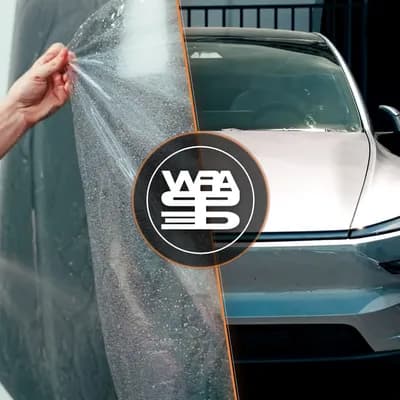
Yes, ceramic coating can be applied over compatible paint protection film. The PPF goes on the vehicle first, then the ceramic coating is applied over the film after the installation is ready for coating. PPF handles physical protection against common road impacts, while ceramic coating adds hydrophobic behavior and can make the protected surface easier to wash and maintain. XPEL specifically offers ceramic coatings developed for use on both paint and PPF.
The two products are therefore not competing layers. They solve different problems.
For an Orange County vehicle that sees freeway miles, sun, bugs, frequent washing, and regular daily use, combining them can create a practical protection system: film between the road and the paint, with a coating on top to simplify surface care.
What Does Ceramic Coating Over PPF Actually Do?
Paint protection film and ceramic coating are often grouped together under “paint protection,” but their jobs are different.
PPF is a physical film installed over painted body panels. Its main role is to create a sacrificial barrier between the factory finish and common hazards such as road debris, rock chips, bug residue, light scratches, and everyday surface wear.
Ceramic coating is a much thinner surface treatment. Applied over compatible PPF, its most noticeable advantage is usually surface behavior rather than impact protection.
A ceramic-coated PPF surface can become more hydrophobic, which helps water bead and makes dirt and contaminants less likely to cling as stubbornly to the film. XPEL describes its FUSION PLUS Paint & PPF coating as a product specifically developed for painted surfaces and paint protection film.
Think of the system as two separate jobs:
- PPF: takes the physical abuse.
- Ceramic coating: helps the surface stay cleaner and easier to maintain.
Ceramic coating does not turn PPF into an impact-proof shell, and it should not be treated as a replacement for film in areas where rock-chip protection is the priority.
Should PPF or Ceramic Coating Be Installed First?
PPF should normally be installed before ceramic coating.
That order matters because paint protection film needs to bond correctly to the vehicle surface. Installing PPF over an existing ceramic coating may interfere with adhesion unless that coating is properly removed during preparation.
3M's current guidance follows the same principle: ceramic coating should be professionally removed before applying its PPF, while ceramic coating may be applied on top of installed PPF.
The practical sequence is:
- Inspect the paint.
- Correct or prepare the surface as needed.
- Install the selected PPF coverage.
- Allow the film to settle according to the installer and product requirements.
- Prepare the film surface.
- Apply a compatible ceramic coating.
If a vehicle already has ceramic coating and you are considering PPF, tell the installer before the project begins. Existing coatings can change the preparation required.
Why Combine PPF and Ceramic Coating?
The main reason is simple: you want impact protection without making the film unnecessarily difficult to maintain.
PPF Handles Road Damage
The front bumper, hood, fenders, mirrors, rocker areas, and other exposed panels can take constant abuse during normal driving.
This is especially relevant for Orange County drivers regularly using the 5, 55, 57, 91, or 405, where a vehicle can accumulate significant freeway mileage.
A properly selected PPF package creates a replaceable protective layer over the original paint.
Ceramic Coating Helps With Cleaning
Film still gets dirty.
Dust, water spots, road grime, bug residue, fingerprints, and normal environmental contamination can collect on PPF just as they can on paint.
A compatible ceramic coating adds hydrophobic properties that can make routine washing and drying easier. XPEL also specifically confirms that ceramic coating can be used over its PPF and that compatible coating does not void its PPF warranty.
That distinction matters. PPF does the heavy protection work; the coating improves the ownership and maintenance experience.
It Can Improve the Finished Appearance
On gloss PPF, a compatible ceramic coating can add slickness, gloss, and surface clarity.
For satin or matte film, however, product selection becomes more important. A coating designed for glossy paint should not automatically be assumed to be ideal for a matte finish.
XPEL, for example, offers a SATIN coating formulated for satin paint and STEALTH PPF and states that the compatible coating maintains the film's matte appearance rather than turning it glossy.
Does Ceramic Coating Make PPF Stronger?
Not in the way many owners assume.
Ceramic coating should not be expected to significantly increase the ability of PPF to absorb a rock strike or prevent a sharp object from damaging the film.
Those are primarily jobs for the physical film.
The coating sits at the surface level and is more useful for:
- water behavior
- contamination resistance
- easier cleaning
- maintaining gloss or the intended finish
- reducing how aggressively dirt bonds to the surface
This is why choosing between PPF and ceramic coating based purely on which one is “stronger” misses the point.
If rock chips are the concern, prioritize PPF coverage.
If easier maintenance is the goal, coating becomes more relevant.
If you want both, coating over PPF can make sense.
Do You Need Ceramic Coating If Your PPF Is Already Hydrophobic?
Not necessarily.
Modern paint protection films may already include surface technologies designed to improve water behavior and maintenance. Some XPEL PPF products, for example, are available with hydrophobic characteristics built into the film system.
Adding ceramic coating is therefore not an automatic requirement.
For some owners, the film by itself provides the finish and maintenance characteristics they want.
For others, coating is attractive because they:
- wash the vehicle frequently
- want stronger water-beading behavior
- maintain a high-gloss finish
- have full-body PPF
- want a consistent surface treatment across protected and unprotected areas
- plan to keep the vehicle for a long time
The better question is not “Does every PPF installation need ceramic coating?”
It is:
Would coating make this particular vehicle easier to own and maintain?
Ceramic Coating Over Front-End PPF vs Full-Body PPF
Your PPF coverage changes how you should think about coating.
Front-End PPF
A common protection setup covers the highest-impact areas such as the bumper, hood, fenders, and mirrors.
If only these panels have PPF, the installer needs to account for two different surfaces:
- PPF-covered panels
- exposed painted panels
Using compatible products and preparing each surface correctly helps produce more consistent appearance and water behavior across the vehicle.
Full-Body PPF
With full-body PPF, nearly every painted exterior panel is protected by film.
Ceramic coating over full-body PPF can be appealing because the same maintenance characteristics can extend across most of the exterior.
That is particularly useful for vehicles that are washed often, dark colors that show water spotting and dust easily, or cars whose owners want to minimize routine detailing effort.
Wrapped OC offers both focused and full-body paint protection planning rather than treating every vehicle as if it needs the same amount of coverage.
What About Ceramic Coating Over Color or Matte PPF?
Yes, it can be possible, but compatibility becomes even more important.
XPEL confirms that its COLOR PPF is designed to work with compatible FUSION PLUS ceramic coatings.
For satin or matte finishes, you also want a coating intended to preserve that appearance.
A poorly chosen surface product can affect how the finish looks, so this is not the place to apply whatever ceramic product happens to be available.
The coating should match:
- the PPF manufacturer
- film type
- gloss or satin finish
- manufacturer care requirements
- desired appearance
For owners choosing a finish-changing film, the first priority should still be getting the film selection and installation right. Coating is the supporting layer, not the foundation of the project.
Can Ceramic Coating Fix Bad PPF?
No.
Ceramic coating cannot correct an underlying installation problem.
It will not properly fix:
- poorly aligned film
- contaminated installation
- visible debris beneath PPF
- incorrect seams
- badly finished corners
- lifting edges
- damaged film
- poor surface preparation
The quality of the film installation comes first.
Wrapped OC's PPF process emphasizes vehicle inspection, surface preparation, panel exposure, edge behavior, and coverage selection before film installation. The shop is also listed as an XPEL Certified Installer in Orange County.
Coating should enhance a properly installed film surface—not hide defects underneath it.
Is Ceramic Coating Over PPF Worth It in Orange County?
It depends on how you use the vehicle.
A garage-kept weekend car driven occasionally may have very different maintenance needs from a Tesla Model Y commuting through Orange County every weekday.
Consider coating over PPF when:
- the vehicle sees frequent daily driving
- you regularly deal with bugs or freeway grime
- the vehicle is washed often
- you want easier routine cleaning
- you have invested in extensive PPF coverage
- maintaining gloss or finish consistency matters to you
You may decide to skip it when your PPF already provides the surface behavior you want and you are comfortable with the existing maintenance routine.
There is no reason to add another product simply because it can be added.
How to Choose the Right PPF and Coating Setup
Start with the reason you are protecting the vehicle.
If your main concern is freeway chips, spend your attention first on where the PPF goes.
A front bumper that takes daily road debris benefits more from proper film coverage than from upgrading the coating on an unprotected panel.
If you are protecting a brand-new vehicle that you plan to keep for years, broader PPF coverage may make more sense.
If you already have the protection coverage you want and your priority is easier washing, ceramic coating over the film becomes a more relevant upgrade.
Installation quality matters at every step. Film selection, surface preparation, edges, seams, curing, coating compatibility, and aftercare all affect the finished result.
For Orange County vehicle owners considering the combination, Wrapped OC can inspect the vehicle and help determine the appropriate PPF coverage first, then discuss whether adding a compatible ceramic coating makes sense for the way the vehicle will actually be driven and maintained.